The Future for Engineers in the VLSI and Semiconductor Industry: Opportunities and Challenges
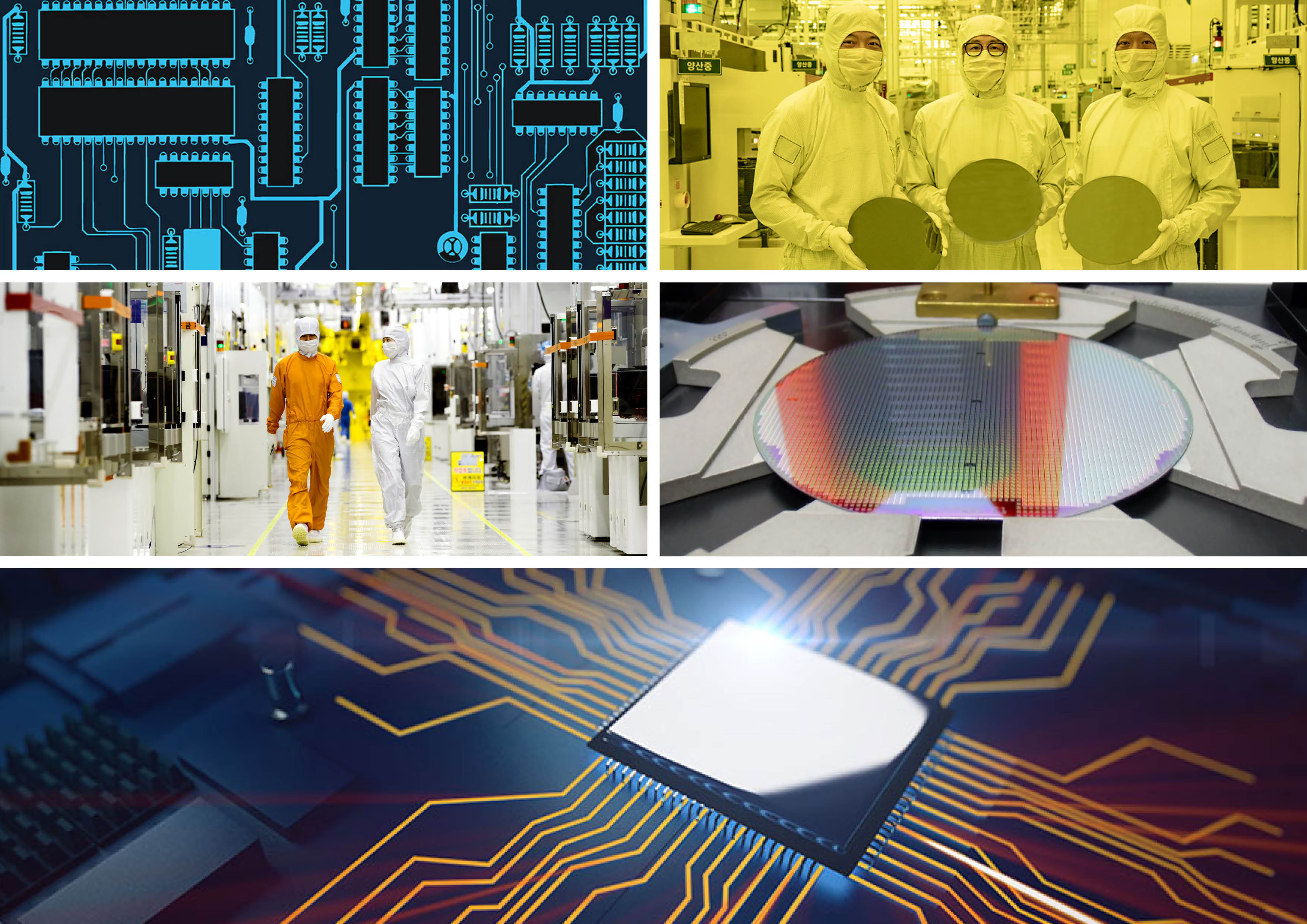
As technology continues to evolve at a breakneck pace, the VLSI (Very Large Scale Integration) and semiconductor industries stand at the forefront of innovation, driving advancements across various fields including computing, telecommunications, automotive, and consumer electronics. For engineers interested in these domains, the future promises both exciting opportunities and unique challenges. This blog delves into what aspiring VLSI and semiconductor engineers can expect, including emerging trends, essential skills, career opportunities, and strategies to navigate this dynamic field.
The Evolving Landscape of VLSI and Semiconductors
1. Technological Advancements:
- Smaller Process Nodes: The continuous push toward smaller process nodes (e.g., 3nm, 2nm) is a hallmark of the semiconductor industry. This involves increasingly complex manufacturing techniques to produce smaller, more efficient, and powerful chips. Engineers will need to understand cutting-edge technologies like EUV (Extreme Ultraviolet) lithography and advanced packaging techniques.
- Integration and Heterogeneous Computing: Combining different types of processors (CPUs, GPUs, FPGAs) on a single chip or within a single system is becoming more common. Engineers must be adept at designing systems that leverage heterogeneous computing for optimal performance and efficiency.
- 3D Integration and Advanced Packaging: Techniques such as 3D IC (Integrated Circuit) and advanced packaging are gaining traction for improving performance and reducing footprint. Engineers will need to design and integrate these complex structures, requiring expertise in both electrical and thermal management.
2. Emerging Technologies:
- Quantum Computing: Although still in its infancy, quantum computing promises to revolutionize computation by solving problems that are currently intractable with classical computers. Engineers with skills in quantum circuits, cryogenics, and quantum algorithms will be in high demand.
- Neuromorphic Computing: Inspired by the human brain, neuromorphic computing aims to create chips that mimic neural processes. This field requires expertise in analog design, machine learning algorithms, and system-level integration.
- IoT (Internet of Things): The proliferation of IoT devices demands advancements in low-power, high-efficiency chips. Engineers will focus on designing chips that balance performance with energy consumption, often in highly constrained environments.
Essential Skills for Future Engineers
1. Technical Expertise:
- Design Tools and Languages: Proficiency in hardware description languages (HDLs) like Verilog and VHDL, as well as familiarity with Electronic Design Automation (EDA) tools, is critical. Engineers should also be comfortable with high-level synthesis tools and simulation software.
- Semiconductor Physics and Materials Science: Understanding the fundamental principles of semiconductor materials, device physics, and fabrication processes is essential for designing and optimizing circuits.
- Signal Processing and Communication: Skills in signal processing and communication protocols are important for designing efficient and reliable circuits, especially in complex systems involving mixed-signal and RF (Radio Frequency) components.
2. Soft Skills:
- Problem-Solving and Innovation: Engineers must be adept at solving complex problems and thinking creatively to overcome challenges associated with cutting-edge technologies.
- Collaboration and Communication: Working on VLSI and semiconductor projects often involves interdisciplinary teams. Effective communication and teamwork skills are crucial for integrating various aspects of a project and ensuring its success.
- Project Management: Engineers should be able to manage their projects effectively, balancing technical requirements with time and resource constraints.
Career Opportunities and Pathways
1. Industry Roles:
- Design Engineer: Focuses on designing and simulating integrated circuits and systems. This role often involves creating new architectures or optimizing existing designs for performance and efficiency.
- Verification Engineer: Ensures that designs meet specifications and function correctly through rigorous testing and validation. This role requires expertise in formal verification techniques and simulation.
- Process Engineer: Specializes in the fabrication processes used to manufacture semiconductor devices. This role involves optimizing production methods and troubleshooting manufacturing issues.
- Application Engineer: Works closely with clients to understand their needs and customize solutions based on available technology. This role requires both technical knowledge and strong customer-facing skills.
2. Research and Development:
- Academic and Industrial Research: Engineers with a passion for research may pursue opportunities in academia or industrial research labs, focusing on pioneering new technologies and methodologies.
- Startups and Innovation: The semiconductor industry is also home to numerous startups and innovation hubs. Engineers interested in entrepreneurship or cutting-edge projects might find opportunities in these dynamic environments.
Strategies for Success
1. Continuous Learning:
The semiconductor industry evolves rapidly, so continuous education is crucial. Engineers should stay updated on the latest trends, technologies, and best practices through online courses, certifications, and industry conferences.
2. Networking:
Building a professional network through industry events, online forums, and academic conferences can provide valuable insights, career opportunities, and collaboration possibilities.
3. Hands-On Experience:
Practical experience is vital. Engaging in internships, personal projects, or contributing to open-source hardware projects can provide hands-on skills and demonstrate expertise to potential employers.
4. Adaptability:
The ability to adapt to new technologies and methodologies will be crucial. Engineers should be open to learning and experimenting with emerging tools and techniques.
Conclusion
The VLSI and semiconductor industries offer a dynamic and rewarding career path for engineers. With continuous advancements in technology and evolving industry needs, there are ample opportunities for those who are passionate about innovation and problem-solving. By developing a solid technical foundation, honing essential soft skills, and staying abreast of industry trends, engineers can position themselves for success in this exciting and rapidly changing field.
Whether you're just starting out or looking to advance your career, the future in VLSI and semiconductors is bright and full of potential. Embrace the challenges, seize the opportunities, and contribute to shaping the technologies that will drive the next generation of advancements.
OUR PLACEMENT PARTNERS












Subscribe to our newsletter to recieved the latest udates and information about codehauz
All rights reserved (C) 2024 Innovative-hub for VLSI Technology